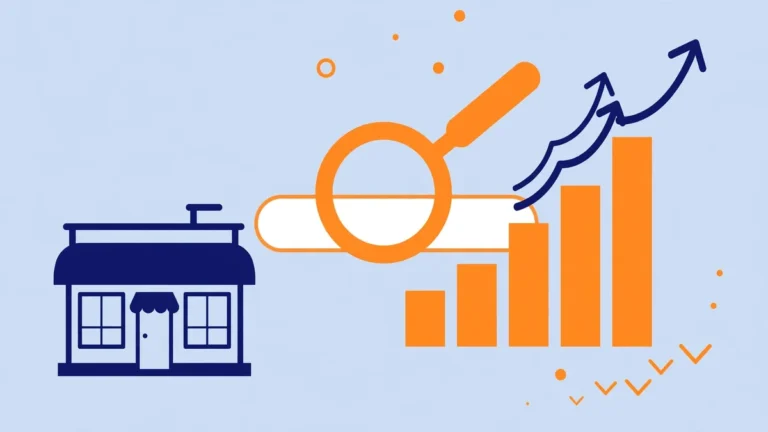
Picture a B2B supplier off King Fahd Road in Riyadh: solid website, decent content, almost no backlinks — and every guide says pay for links or beg for guest posts. Then he discovers a quieter tactic: find pages linking to dead resources and offer his own working page as the replacement. No begging, no buying. That is broken link building in one sentence, and it remains one of the most reliable ways for a new site to earn editorial backlinks.
Short version: find dead pages with backlinks, build a better replacement, and email linking sites to suggest the swap. It works in 2026 — expect 8–15% of emails to earn replies, 5–15% to become links.
Broken link building is a tactic where you find pages linking to dead (404) resources, create a replacement on your site, and ask the linking site to swap in your link. It is white-hat: you earn the link by solving the site owner’s problem, not by paying for placement.
What is broken link building, exactly?
Broken link building is a three-move tactic: find a dead page that still has backlinks, publish a working replacement on your site, then email each linking site to suggest the swap. Every link you win is editorial — a human chose to add it — which is exactly what Google rewards.
Websites rot — pages move, companies rebrand, blogs shut down — and every dead outbound link embarrasses its owner. Report it, hand them a replacement, and you have done them a favour: that favour dynamic is the engine, and why this converts better than cold guest-post pitches. A backlink is any link from another site to yours; link building is the discipline of earning them.
Does broken link building still work in 2026?
Yes — broken link building still works in 2026, but it works as skilled editorial outreach, not as a loophole. Well-targeted campaigns see roughly 8–15% reply rates and 5–15% of sent emails turning into placed links. Anyone promising 40% conversion is selling a course, not describing reality. What separates winners from quitters is prospecting discipline, not email cleverness.
Three things changed: the easy pickings are gone, Google’s spam policies keep tightening around manipulative link schemes, and site owners have seen the same template a hundred times. The contrarian truth: campaigns fail at prospecting, not outreach. Spend 70% of your time finding dead pages with valuable backlink profiles — 30 excellent prospects beat 500 scraped ones.
The broken link building process at a glance
The full process has four stages: find dead pages that still carry backlinks, vet those opportunities for quality and relevance, build a replacement page that deserves the link, and run short, honest outreach with one follow-up. Budget one focused afternoon for your first 20 prospects — prospecting is slow at first and gets fast with practice.
| Stage | What you do | Tools | Output |
|---|---|---|---|
| 1. Find | Dead pages with live backlinks | Ahrefs, Semrush, operators | Dead-URL prospect list |
| 2. Vet | Authority, relevance, traffic | Ahrefs, manual review | 20–30 qualified targets |
| 3. Build | Replacement page | Wayback Machine, your CMS | One strong linkable asset |
| 4. Outreach | Email, one follow-up, track | Hunter, spreadsheet | Placed backlinks |
Honest warning: expect two to four weeks to your first placed link.
Step 1: Find dead pages with backlinks worth replacing
The highest-value targets are dead pages with dozens of live backlinks. In Ahrefs, enter a competitor domain in Site Explorer, open Best by Links, filter “404 not found” — dead pages ranked by referring domains, as Ahrefs’ own guide demonstrates. Confirm the page is truly dead first; reporting a working link destroys credibility.
Four link prospecting methods, in order of value. Competitors’ dead pages via the Ahrefs method above — a rival who redesigned without redirecting old URLs is sitting on orphaned backlinks. Check Domain Rating and confirm no 301 already reclaims the equity. Dead pages on any topic via Content Explorer’s broken filter. Resource pages: search keyword + intitle:resources, then check outbound links with Screaming Frog or a free checker — no paid plan needed. Wikipedia: dead external links are tagged, and smaller sites usually cite the same dead source. Vet for topical relevance, real referring domains, linking pages with SERP traffic, and dofollow status.
Step 2: Build a replacement page that deserves the link
Your replacement must cover the same topic as the dead page and be visibly better — fresher data, clearer structure, working visuals, answers the original never gave. Check the archived version in the Wayback Machine first, then beat it on those axes. Budget 3–6 hours; a thin rewrite will not convert.
Open the dead page in the Wayback Machine and beat it on exactly what is outdated or missing — 2026 data where it cited 2021, screenshots where it had none, an FAQ it never wrote, and clear E-E-A-T signals (named author, sources, dates). Budget 3–6 hours; a thin rewrite will not convert. Pair this with the skyscraper technique: be unambiguously the best result for the topic. And do not build until you confirm demand — five linking domains with real traffic and solid domain authority is the minimum before you invest. Bonus for Saudi sites: dead English resources often have no Arabic equivalent, so a bilingual replacement wins links from both sides.
Step 3: Write outreach emails that get replies
The emails that convert are under 120 words, name the exact broken link, and offer the replacement without demanding anything — personalization beats cleverness every time. Lead with the specific reason this email matters to the recipient’s page. Never ask for exact-match anchor text; let the editor choose natural wording.
Template 1 — the first touch:
Subject: broken link on your [page topic] page
Hi [first name],
Reading your [guide] on [topic] — one link returns a 404: “[anchor text]” pointing to [dead URL].
We published a current [guide on the topic] at [your URL] as a possible replacement.
[Your name]
Template 2 — the follow-up, 7–10 days later:
Subject: re: broken link on your [page topic] page
Hi [first name] — quick bump on the broken link flagged last week, still a 404 on my end. Happy to send our replacement if useful. [Your name]
Confirm the link is still broken the morning you send, personalize the first line with something real, and keep one ask per email.
Step 4: Follow up once, track everything, and learn
Send exactly one follow-up, then stop — a third email converts near zero and burns the relationship. Track prospect URL, broken URL, contact, dates, and link status in a sheet. After 50 emails, diagnose honestly: a sub-5% reply rate means weak prospects or a weak replacement page, not a weak subject line.
Benchmarks from 2026 breakdowns such as Search Engine Land’s analysis: 8–15% reply rate, 5–15% link conversion rate, roughly 4–7 links per 50 emails. Each placed link passes link equity once Google recrawls the page, so prefer pages Google visits often. No tactic guarantees rankings or ROI — which is why honest agencies publish how they talk about SEO results. Treat this as one system inside a broader off-page SEO program, judged over quarters; our timeline guide keeps expectations honest.
Broken link building for Saudi businesses
This tactic overperforms in Saudi Arabia’s bilingual market: dead English resources often lack Arabic equivalents, so a bilingual replacement wins links from both sides. Saudi niche blogs redesign often and redirect rarely — Jeddah e-commerce, Riyadh B2B, and Dammam industrial sites are productive hunting grounds. Write outreach in the target site’s language; a short Arabic email stands out where English inboxes are saturated.
Write outreach in the language of the target site. A short, polite Arabic email flagging a broken link stands out because local inboxes are not yet saturated with outreach the way English ones are.
A Makkah angle: Umrah and Hajj resource pages
Hospitality sites targeting pilgrims are a seasonal goldmine: Umrah guides and “hotels near the Haram” roundups get rewritten constantly, and old versions die with backlinks from Indonesian travel blogs and Urdu forums intact. Prospect 4–6 months before Ramadan while editors refresh content — start late and those links are fixed with someone else’s content.
Frequently asked questions
Is broken link building white hat?
Yes. Broken link building is white-hat SEO because the link is earned by helping a site owner fix a real problem — a dead link that hurts their visitors — rather than by paying for placement. Google’s spam policies target manipulative links — paid links, large-scale exchanges. A genuine replacement suggestion is editorial outreach — the resulting link is one a human editor chose to add.
How long does broken link building take to show results?
Expect two to four weeks from your first prospecting session to your first placed link, and two to three months before the new backlinks move rankings meaningfully. Most replies arrive within a week; the slow part is prospecting and building the replacement. Treat it as a quarterly system: one focused campaign per quarter compounds into a strong link profile within a year.
How many backlinks can I realistically earn?
A well-run campaign earns roughly 4–7 links per 50 personalized emails, based on benchmarks of 8–15% reply rates and 5–15% placement rates. A solo operator sending 50 careful emails a month can expect a handful of quality editorial links monthly. Volume scales with prospecting quality, not blasting — 30 excellent prospects beat 300 scraped ones. Patience matters more than volume: results compound as your prospect list and replacement library grow.
Do I need paid tools like Ahrefs or Semrush?
Paid tools make prospecting far faster — Ahrefs’ Best by Links report with a 404 filter finds competitor dead pages in minutes — but they are not required to start. You can prospect with Google search operators for resource pages plus a free broken-link checker, verifying authority manually. For a one-off campaign the free route works; run it monthly and a subscription pays for itself.
What is a good outreach response rate?
For personalized outreach to relevant pages, 8–15% of emails getting a reply is realistic, with 5–15% converting into placed links. Generic templated blasts perform 50–75% worse. If your reply rate drops below 5% after 50 emails, stop and diagnose: the usual culprits are a weak replacement page, irrelevant prospects, or emails that read as mass templates. Fix the asset or the list before rewriting the subject line.
Can broken link building get my site penalized?
Not when done honestly. Google penalties — including manual actions — come from manipulative patterns: paid links, private blog networks, automated spam at scale. Broken link building earns editorial links one at a time from real site owners who chose to link to you, which is what Google’s guidelines describe as legitimate. Risk appears only with shortcuts: “broken link building packages” on link farms, or exact-match anchor demands that signal manipulation.
هل استراتيجية الروابط المعطلة فعّالة للمواقع العربية؟ (hal istiratijiyyat ar-rawabit al-mu’attala fa”ala lil-mawaqi’ al-‘arabiyya — “is the broken-links strategy effective for Arabic websites?” — MSA)
نعم، بل إنها فعّالة بشكل خاص. (Na’am, bal innaha fa”ala bishakl khass — “Yes, and it is especially effective.”) Arabic SEO guides covering استغلال الروابط المعطلة (istighlal ar-rawabit al-mu’attala, “exploiting broken links”) confirm real demand for the tactic in Arabic. Competition is lower since few practitioners run Arabic outreach, and dead English resources often lack any Arabic equivalent — so a strong Arabic replacement can win links from both Arabic and English sites.
What is the difference between broken link building and fixing broken links on my own site?
They are opposite directions of the same problem. Fixing your own broken links means repairing internal 404s and updating outbound links — site hygiene that protects crawl budget and user experience. Broken link building means finding broken links on other people’s sites and earning backlinks from them — an offensive acquisition tactic. Do the hygiene first — a Search Console audit takes an afternoon and should precede any outreach.
The bottom line
Broken link building was never a shortcut — it is patient outreach trading helpfulness for backlinks. Find dead pages with real backlink profiles, build replacements that deserve the link, write short honest emails with one follow-up. Most campaigns fail at prospecting, not writing: a few hours a month, a handful of links a quarter, compounding yearly. This week, run one competitor through a broken-pages report — five dead URLs with real linking domains means build the replacement before writing one email. Prefer done-for-you? Our managed off-page SEO program covers it all — see our SEO pricing to compare plans.
What is the one link building question you have never gotten a straight answer to?
Written by Mohammad Muttiullah, Founder of EazyRankSEO. Mohammad leads link building and outreach strategy for businesses across Riyadh, Jeddah, Makkah, and Madinah. About our team.