
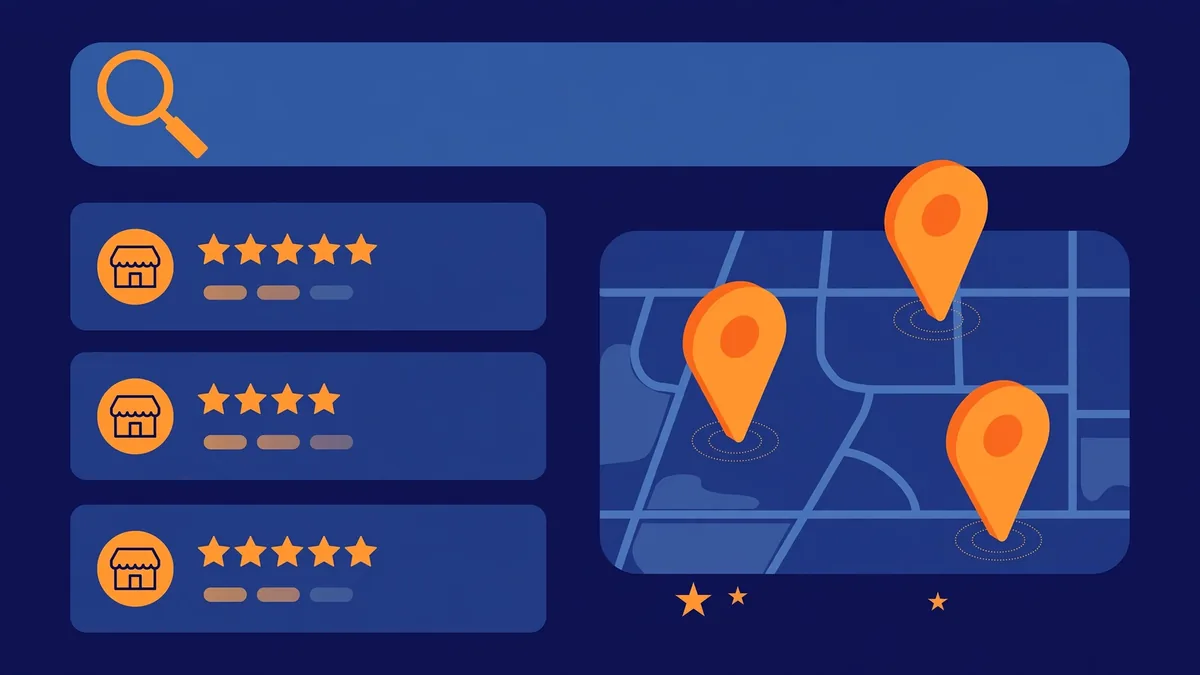
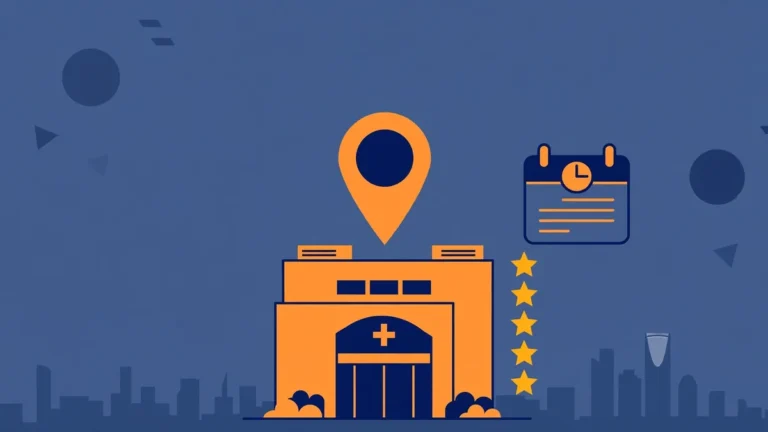
Picture a hotel owner in Aziziyah, Makkah, searching the way his guests do. He types “hotel near Haram”: three hotels fill the pack. His has better reviews than one of them, yet he sits at number four — the list almost nobody opens. During Ramadan, that gap decides everything.
If you have ever wondered how to rank in Google’s local pack, you are asking the highest-leverage local visibility question there is. The pack captures most attention on local searches, and it runs on fewer, better-documented signals.
This guide covers the 2026 mechanics: how Google builds the pack, what the expert data says each factor is worth, what knocks businesses out, and how Makkah businesses should time it around Ramadan and Hajj. At EazyRankSEO, here is the honest breakdown.
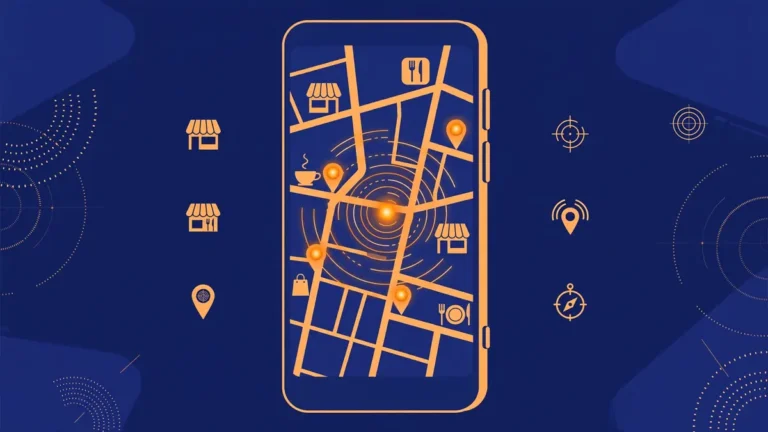
The local pack is the box of three listings with a map at the top of Google’s search results for local-intent queries — like “dentist near me” or “فندق قريب من الحرم” (funduq qareeb min al-haram — “hotel near the Haram”; MSA). It lives in Google Search, not the Maps app, built from three factors: relevance, distance, prominence.
What Is Google’s Local Pack — and How Is It Different From Google Maps?
How to rank in Google local pack results starts with knowing what the pack is: the box of three business listings with a map that Google shows inside its search results for local-intent queries. It is not the Google Maps app, and it is not the expanded “finder” list you see after clicking “more places.” Three different surfaces, three different rulebooks.
The local pack is the three-business box in Google’s SERP; clicking it opens the local finder, still inside Search. The Google Maps app is a separate interface with its own ordering quirks. One profile feeds all three, but the mechanics differ — which is why how to rank in Google local pack content must treat the pack as its own surface.
Our companion Google Maps playbook covers the app; this article covers the pack’s machinery.
What Actually Decides Who Gets Into the Local Pack in 2026?
Google documents exactly three local ranking factors — relevance, distance, and prominence — and has not changed that description in years. How to rank in Google local pack positions in 2026 is about how much weight each carries in practice: the Whitespark 2026 Local Search Ranking Factors survey (47 experts, 187 signals) sorts pack influence into eight groups, led by your profile and your reviews.
Google’s own words (Google’s local ranking guidance): relevance — how well your profile matches search intent; distance — how far you are; prominence — how well-known you are. You control the first and third; distance is fixed.
| Signal group | Pack influence (2026 consensus) |
|---|---|
| Google Business Profile signals | ~32% |
| Review signals | ~20% |
| On-page signals | ~15% |
| Behavioural signals | ~9% |
| Link signals | ~8% |
| Citation signals | ~6% |
| Personalization | ~6% |
| Social signals | ~4% |
Treat these as directional priorities, not exact coefficients: GBP plus reviews are roughly half the game, and on-page SEO outranks links and citations — yet most owners ignore the website. Link signals mean backlinks, sustained link building, and links from high-domain-authority sites.
Why Does Distance Sometimes Beat Everything Else?
Distance is the one ranking factor you cannot change. For “near me” searches it acts like a hard filter: Google draws a boundary around the searcher and only ranks businesses inside it. A stronger business across town can lose to a weaker one around the corner — and dragging your map pin toward customers you do not serve is spam that gets profiles suspended.
Think of the pack as a radius, not a leaderboard. For “pharmacy open now” in Dammam — often a voice search on mobile — Google filters by proximity first, then orders survivors by relevance and prominence. Relevance and prominence decide your position within your distance band; distance decides the band.
Race rivals at your own distance, not the business three districts closer — the same district-by-district logic applies to Local SEO in Riyadh and to Local SEO in Jeddah. Service-area businesses: define areas honestly and hide the address without a storefront. Faking a location buys a verification hold.
How Much Do Reviews Really Move the Local Pack?
Review signals carry about one-fifth of local-pack weight in the 2026 expert consensus — more than links and citations combined. That makes reviews the highest-leverage prominence lever you control: not just the star rating, but the count, the recency, the velocity of new reviews, the words customers use, and whether you respond to every single one.
What moves the needle: velocity and recency — steady new reviews beat a stale total; review text — customers naming your service and neighbourhood; owner responses — reply within days; public responses are E-E-A-T signals. For any business studying how to rank in Google local pack results, the review system — off-page SEO at its purest — comes first: see our guide to getting more Google reviews.
Whitespark’s 2026 study of over a million listings found keyword-bearing business names reach the top three far more often — in travel and tourism, 29.54% vs 6.05% (the 2026 study). Precisely why Google polices it. Never buy reviews.
What Knocks a Business Out of the Local Pack?
Businesses usually fall out of the pack for boring, fixable reasons: a duplicate profile splitting their reviews in two, an address Google cannot verify, a primary category that does not match what customers search, or a suspension triggered by the very shortcuts that once worked. Diagnose in that order — duplicates and categories before anything exotic — because exotic is rarely the answer.
The knockout list: duplicate profiles splitting reviews — search Maps, claim, merge; wrong primary category — a Makkah hotel filed generically without keyword research loses to a precise rival; unverifiable addresses — P.O. boxes trigger verification holds; keyword-stuffed names — a reportable violation in 2026; review manipulation — fake reviews get removed in waves.
When diagnosing how to rank in Google local pack problems, check this list first. If the profile is suspended, see our guide to a suspended Google Business Profile. Our GBP recovery starts from SAR 800.
Why Is Makkah’s Local Pack a Different Game?
Makkah’s local pack runs on a calendar no other Saudi city has: Ramadan and Hajj compress a year’s demand into weeks, as millions of pilgrims search in Arabic, Urdu, Indonesian, and Turkish for hotels near the Haram. Rankings earned off-season decide who gets booked in-season — which is why how to rank in Google local pack results in Makkah means planning backwards.
Your customers are one-time guests, so review velocity during the season is the entire game. Thirty genuine reviews a week through Ramadan beats any year-round competitor. Ask at checkout with a QR code in the guest’s language; mirror the languages they type. Madinah mirrors this at lower volume.
The Ramadan countdown: when a Makkah business should start
Start four to six months before the peak. Ramadan 2027 begins around early February 2027: verify the profile, lock the category, and build the review system in October 2026.
How Long Does It Take to Break Into the Local Pack?
How to rank in Google local pack positions has a faster honest timeline than organic SEO: profile fixes can shift visibility within days to weeks, while review and citation momentum compounds over one to three months. In competitive categories — Makkah hotels before Ramadan, Riyadh clinics — expect three to six months before the pack stabilises in your favour.
By lever — track the website side in Google Search Console: profile fixes take days to weeks; review velocity four to twelve weeks; citations and authority one to three months. A brand-new profile in a competitive category needs the longest runway.
Competition and distance stretch timelines; an older, review-rich profile shortens them. Anyone promising the pack in seven days is selling ads or spam — algorithm updates keep shifting the ground, which is why we publish how we talk about SEO results.
What Should You Do This Week?
How to rank in Google local pack positions comes down to a short list done in the right order: fix what Google reads first — profile, then technical SEO basics — then build what compounds. Start with the primary category and NAP consistency, then switch on a review request system, then post weekly. Momentum beats perfection.
Your ordered checklist: (1) audit the primary category against the top three pack holders; (2) lock NAP consistency — one identical name, address, and phone everywhere; (3) switch on review requests at every checkout, respond within 48 hours; (4) publish one Google post — lightweight content marketing; (5) merge duplicate profiles on Maps.
When the work outgrows DIY — multiple branches, a suspension, or a Makkah property heading into Ramadan — professional local SEO services take over as one job. Compare our SEO pricing.
Frequently Asked Questions
What is the local pack on Google?
The local pack is the box of three business listings with a map at the top of Google’s search results for local-intent queries — “dentist near me,” “best hotel Makkah,” or the Arabic equivalent. It belongs to Google Search, distinct from the Maps app and the finder list. Businesses earn their way in through relevance, distance, and prominence — the three factors Google itself names.
Why am I not showing in the local pack for “near me” searches?
Usually distance or relevance. For “near me” queries Google filters by proximity first: outside the searcher’s radius, nothing puts you in that pack. Nearby but absent means relevance — a vague category, an incomplete profile, or too few reviews. Check distance first, then fix the profile — and confirm it is verified. Also check for a duplicate profile splitting your reviews — a common silent killer.
How many reviews do I need to rank in the local pack?
No magic number here — steady, recent reviews beat a large stale total. Five to ten genuine reviews a month typically outranks two hundred reviews with nothing new in two years. Ask every satisfied customer, make it one tap, and respond to all of them — it lifts conversion rate from views to calls. Build the ask into your checkout routine so it happens every day, not just when you remember.
Does my website affect my local pack ranking?
Yes. On-page signals carry about 15% of local-pack weight in the 2026 expert consensus — the third-largest group. Google reads your website to confirm your profile’s claims: dedicated service pages with clear meta titles, matching NAP details, LocalBusiness schema, fast page speed, clean internal linking. Start with one dedicated page per core service, written for one intent each — technical SEO basics that compound.
Why does a competitor farther away outrank me in the pack?
A farther business with far greater prominence and tighter relevance can outrank a closer, weaker listing. The fix is not moving your pin (spam); it is out-earning them on relevance and prominence — the core of how to rank in Google local pack results. Study what they do better — then beat them at it, one signal at a time, relentlessly.
كيف أظهر في نتائج البحث المحلية في جوجل؟ (How do I appear in Google’s local search results?)
كيف أظهر في نتائج البحث المحلية في جوجل (kayfa azharu fi nata’ij al-bahth al-mahalliyya fi google — “how do I appear in Google’s local search results”; MSA) is among the most common Arabic local-SEO questions. Answer: claim and verify your Google Business Profile, choose the most specific category, keep name, address, and phone identical everywhere, and earn steady genuine reviews — Arabic-language reviews strengthen relevance for Arabic queries.
Should I put keywords in my Google business name?
No — use your real-world name, exactly as on your signage and commercial registration. Whitespark’s 2026 study found keyword-bearing names reach the top three far more often (travel and tourism: 29.54% vs 6.05%) — which is why Google polices it: keyword stuffing is a top suspension risk. Put keywords in categories, services, and posts. That is where they help rankings without risking your listing.
When should a Makkah business start local-pack work for Ramadan?
Four to six months before the peak — now, in October 2026, for Ramadan 2027 (expected early February 2027). The pack rewards history: review velocity and engagement need months to mature. Starting late means racing businesses with a four-month head start. October starters enter Ramadan verified and review-rich; January starters enter it invisible. Plan backwards from the season, every single year, without exception.
The Bottom Line
Back to the Aziziyah hotel owner: no bigger ad budget needed — just the machinery explained. Six months later, his hotel is one of the three.
That is the discipline of how to rank in Google local pack results: know your surface, weight effort by the data, and start early. If you would rather have practitioners run it, our local SEO services cover exactly that — compare our SEO pricing to find the right tier. That ongoing work is exactly what our local SEO services in Saudi Arabia are built to deliver.
What is the one local-pack question you have never gotten a straight answer to? Leave it in the comments — I read every one.
About the author: Mohammad Muttiullah is the Founder of EazyRankSEO, an SEO agency serving businesses across Riyadh, Jeddah, Makkah, and Madinah. He leads local SEO strategy for Saudi SMEs, with a focus on Google Business Profile mechanics, review systems, and map-pack visibility. Learn more about our team.

One Comment