Picture a restaurant owner on Tahlia Street in Jeddah: SAR 4,000 a month on Google Ads, and the phone rings — until the month he pauses the ads and it goes silent, while the restaurant across the street, which invested in search optimization two years ago, keeps getting bookings for free. Only one of them owns its traffic.
That is the question behind every “seo vs sem vs ppc” search: should you earn your clicks, buy them, or both? At EazyRankSEO, we tell every prospect the same uncomfortable truth — the wrong answer wastes more money than any other marketing decision you will make. Should a new Riyadh clinic buy ads while it waits for rankings?
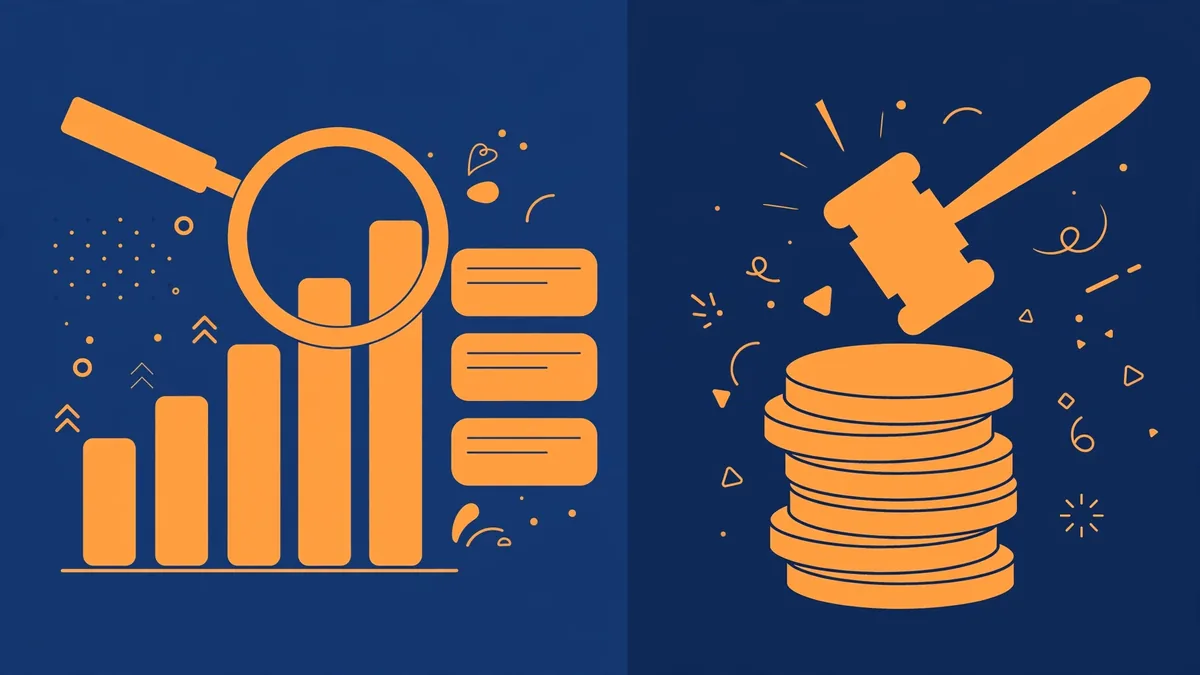
SEO vs SEM vs PPC comes down to this: SEO earns free clicks by ranking in Google’s organic results. PPC buys clicks through an auction — you pay per click. SEM is the umbrella term for search marketing, covering both. Same goal, opposite economics: this guide gives you the honest comparison, Saudi-market costs, and a decision framework.
What do SEO, SEM, and PPC actually mean?
Ask ten marketers what seo vs sem vs ppc means and you will hear three different answers — the industry changed the definitions mid-game. In 2026, most practitioners use SEM to mean paid search only; older textbooks still call it the umbrella over both. Know which definition your agency uses.
The working definitions:
- SEO — earning free rankings through content, technical health, and authority. You pay with time and expertise, never per click.
- PPC — a billing model: you bid on keywords and pay only when someone clicks. Google Ads is the main search PPC platform.
- SEM — the contested one: purists say all search marketing, practitioners mean paid search (the full terminology debate).
Why does it matter? “We do SEM” on a proposal can mean a SAR 3,000/month ad fee, a SAR 3,500/month organic retainer, or both.
How does SEO actually work?
SEO earns Google’s trust instead of paying for placement: crawlers discover, index, and rank your pages on relevance, content quality, technical health, and authority signals like backlinks. No money changes hands per click. The catch is time — meaningful organic traffic typically takes 3–6 months, and you compete below the “Sponsored” ads.
Three stages run the machinery. Crawl budget decides how much of your site Googlebot visits. Indexation decides which pages enter Google’s database; unindexed pages cannot rank, which is why your XML sitemap and robots.txt matter. Ranking blends relevance and authority (E-E-A-T): search intent, on-page SEO (meta title, meta description, header tags, internal linking, anchor text), technical SEO (page speed, Core Web Vitals, mobile-first indexing, schema markup, canonical tags), and off-page SEO (link building, domain authority).
Two 2026 complications: organic listings now sit below AI Overviews and the “Sponsored” block, so #1 buys less visibility than five years ago — though the organic traffic still converts better. And local and voice search queries show the local pack and Google Maps, where your Google Business Profile, NAP consistency across local citations, customer reviews, and star ratings decide who calls. That squeeze is reshaping the seo vs sem vs ppc calculus. More in our timeline guide and on-page SEO service.
How does PPC actually work?
PPC is an auction on every search. Advertisers bid on keywords; Google combines each bid with a Quality Score — rating expected click-through rate, ad relevance, and landing page experience — to compute Ad Rank, which decides placement. You pay only per click, and the moment your budget stops, traffic stops.
Quality Score is where Saudi advertisers quietly bleed money: a higher score wins better positions at lower cost-per-click. The most common mistake is sending ad traffic to a generic homepage — relevance scores drop and you pay a premium per click. Dedicated landing pages are a direct discount on every click; their page speed and mobile usability fall under website design services and affect ad costs as surely as bids do — another reason the seo vs sem vs ppc decision is never just about bids.
SEO vs SEM vs PPC: The Honest Side-by-Side Comparison
SEO vs SEM vs PPC is not a contest with one winner — it is a choice between renting attention and owning it. SEO costs time and expertise but compounds; PPC costs money per click but delivers today. SEM, in modern usage, is the professional management of the paid side.
| Factor | SEO (organic) | PPC / paid search |
|---|---|---|
| Cost model | Investment in content, tools, expertise; no per-click cost | Pay per click; every visit has a price |
| Speed | 3–6 months to meaningful traffic | Leads within hours of launch |
| Longevity | Compounds; traffic persists after work slows | Stops the instant the budget stops |
| SERP position | Below “Sponsored” ads, AI Overviews, featured snippets | Top “Sponsored” slots |
| Trust / CTR | Higher — users skip labelled ads | Lower trust, strong for urgent high-intent queries |
| Control | Limited — Google decides rankings | Full — budget, audience, schedule, geo-targeting |
| Measurement | Delayed attribution via Google Search Console, Google Analytics | Real-time: CPC, conversion rate, ROI per keyword |
| Best for | Evergreen demand, authority, long-tail queries | Launches, seasonal peaks, testing, competitive keywords |
Methodology: dimensions synthesized from the 2026 comparison frameworks of HaloTech Media and Search Engine Land; cost/speed characterizations reflect practitioner consensus, not a single study.
The most misread row is measurement: PPC reveals converting keywords in days; SEO takes months. The 2026 HaloTech guide offers a similar side-by-side.
SEO vs SEM vs PPC: Which One Should Your Business Choose?
For most Saudi small businesses, the honest answer to seo vs sem vs ppc is not “which” but “in what order.” Need leads this month? Start with PPC — it buys time. Can you invest 4–6 months? Run SEO alongside it — it buys freedom from ad spend. Fix conversion fundamentals first.
- Runway: under 3 months → PPC first. Over 6 months → both, weighted toward SEO.
- Cost per customer in ads: where clicks are expensive — competitive Riyadh B2B niches — SEO’s fixed investment wins over pure PPC.
- Seasonality: spikes (Ramadan, White Friday) reward PPC’s on/off switch; constant demand rewards SEO’s compounding.
Why the answer differs for a Jeddah restaurant vs a Riyadh B2B firm
A seafood restaurant near the Jeddah Corniche lives on “near me” searches, Google Maps, and review velocity — the local pack, Google Business Profile optimization, and a modest geo-targeted PPC budget beat a 6-month content strategy. A Dammam B2B firm faces the opposite math: few searches, huge contract values — ranking organically for a handful of terms is the moat; PPC works best surgically. Our local SEO services cover the first scenario (ZestRank’s 2026 guide agrees).
What do SEO and Google Ads actually cost in Saudi Arabia?
October 2026 framing: SEO in Saudi Arabia is typically a fixed monthly investment — our launch pricing runs SAR 1,800–6,500/month, audits from SAR 1,200 — while Google Ads has two cost layers: media spend (per click) and management (whoever runs the campaigns). Budget for both, or a “SAR 3,000 ad budget” is really SAR 1,500 of clicks.
- Front-loaded, then flat: months 1–3 carry audits and fixes; maintenance costs less once rankings land.
- The learning tax: new campaigns need conversion data first; expect the first 4–6 weeks to be priciest per lead.
- Cheap clicks can cost most: low-competition keywords cost little because they convert little — divide spend by customers, not clicks.
Compare SEO pricing against cost-per-customer math (results disclaimer).
How to run SEO and PPC together without wasting money
Together beats either alone — with a division of labour. PPC owns speed, testing, and urgent demand; SEO owns compounding, trust, and lasting visibility. The winning sequence: PPC funds months 1–3 while SEO builds; from month 6, shift budget from paid toward organic as rankings mature and costs fall steadily.
- Let PPC pick SEO targets. Ad data reveals converting keywords within weeks — point content marketing and link-building at proven winners. The highest-ROI move in any seo vs sem vs ppc strategy.
- Let SEO cut ad costs. Fast, relevant landing pages raise Quality Score and lower cost-per-click.
- Defend brand terms selectively. A small defensive campaign is cheap insurance only if competitors bid on your name.
- Own the whole page. Holding the ad slot plus the organic listing roughly doubles SERP real estate — Google’s own older research found many ad clicks incremental, not merely replacing organic ones.
One caution: PPC never directly improves rankings — ad spend buys no algorithmic favour. The synergy is informational and strategic, not algorithmic.
7 budget-burning mistakes businesses make with SEO and PPC
Most wasted search budgets come from seven repeatable mistakes: treating PPC as permanent, quitting SEO at month three, paid clicks to a slow homepage, no conversion tracking, broad keywords with no negative list, ignoring Arabic queries, and judging SEO by rankings not revenue. Each is fixable in a week once named.
- Renting forever — acquisition cost never falls; paid is the bridge, not the destination.
- Quitting SEO at month 3 — curves bend upward around months 4–6.
- Homepage as landing page — generic pages tank Quality Score and conversion together.
- No conversion tracking — fix tracking before raising budgets.
- Broad match, no negatives — you pay for job seekers and researchers who never buy.
- English-only campaigns — Jeddah B2C and Makkah hospitality skew Arabic; Riyadh B2B skews English.
- Rankings as the KPI — #1 for an unsearched keyword is vanity. Track calls, bookings, revenue.
Frequently Asked Questions
Is SEO better than PPC for a small business?
On a limited budget, SEO usually wins long-term: traffic compounds, cost per visitor falls, and organic listings earn more trust than labelled ads. But a new business with no cash flow cannot wait 4–6 months. The practitioner answer: PPC first for survival, SEO alongside for the future, then shift spend to organic. Judge both by cost per customer, never by clicks.
Can I run Google Ads without doing SEO — or SEO without ads?
You can, but each solo path has a trap. Ads without SEO means acquisition cost never decreases — pausing spend ends your lead pipeline overnight. SEO without ads means flying blind for months: no fast feedback on converting keywords, no coverage during seasonal peaks. They are independent but complementary; getting the budget split right matters more than the binary choice.
How long does SEO take compared to PPC?
PPC can deliver first leads within hours — the auction is instant; the only ramp is setup plus a 4–6 week learning period. SEO needs 3–6 months for visible movement and 6–12 for substantial lead flow, depending on competition and algorithm updates in your niche. That gap is the sequencing insight at the heart of the seo vs sem vs ppc decision: paid speed funds the business while organic equity compounds.
Does spending on Google Ads improve my organic rankings?
No — and this myth costs real money. Google does not reward advertisers with better organic positions; the auction and organic ranking are separate systems. What PPC gives your SEO program is faster intelligence: within weeks you learn which keywords convert and which pages persuade. Feed that into keyword research — your SEO improves through better decisions, not algorithmic favour.
ما الفرق بين السيو والإعلانات المدفوعة؟
ما الفرق بين السيو والإعلانات المدفوعة (ma al-farqu bayn as-siyu wa al-i’lanat al-madfu’a — “what is the difference between SEO and paid ads,” MSA register) is among the most asked Arabic marketing questions in the Kingdom. السيو (as-siyu, SEO) earns free, lasting visibility; الإعلانات المدفوعة (al-i’lanat al-madfu’a, paid ads) buy visibility that stops when spending stops. Arabic content on this comparison is still thin — an opening for Saudi businesses publishing genuinely useful Arabic explanations.
Should I hire one agency for both SEO and PPC?
One accountable partner usually beats two vendors blaming each other when leads dip — integration is where value lives, from shared keyword data to landing pages serving both channels. The risk is a generalist mediocre at both. Demand separate reporting and KPIs per channel, plus a plain-language account of how the two interact. If an agency cannot explain its sequencing, it does not have one.
Is SEM the same as PPC?
In 2026 practitioner usage, essentially yes — “SEM” on a proposal means paid search management, and PPC is the billing model powering it. Traditionally, though, SEM was the umbrella covering SEO plus PPC; the industry simply drifted. What matters is contractual clarity: ask whether their SEM includes organic work, paid management, or both — and what each monthly line costs.
What budget should I start with for Google Ads in Saudi Arabia?
No universal number exists — it depends on your niche’s auction competition, geography, and what a customer is worth. A practical frame: budget for at least 100–200 clicks per month so the algorithm has data to learn from, plus a separate management layer, and run it 6–8 weeks before judging. High-competition Riyadh niches cost meaningfully more than local services in smaller cities. Never scale spend before conversion tracking is verified.
The Bottom Line
Back to the Jeddah restaurant owner: his mistake was never the ads. His mistake was answering the seo vs sem vs ppc question with a rental agreement instead of a growth strategy.
Your framework: Step 1 — fix conversion fundamentals (fast pages, clear offers, tracking) before spending on either channel. Step 2 — if you need revenue now, start PPC with tight, intent-matched campaigns while SEO builds underneath. Step 3 — from month six, measure cost per customer per channel and shift budget toward whichever compounds.
Want the numbers for your situation? Compare our SEO pricing against the cost-per-customer math in this guide — then ask your unanswered SEO-vs-ads question in the comments.
About the Author
Mohammad Muttiullah, Founder of EazyRankSEO — Mohammad leads SEO strategy for Saudi businesses, from Riyadh clinics to Jeddah restaurants. He writes about the practical side of search marketing: what compounds, what burns budget, and how to tell the difference before you spend. Learn more about our team.